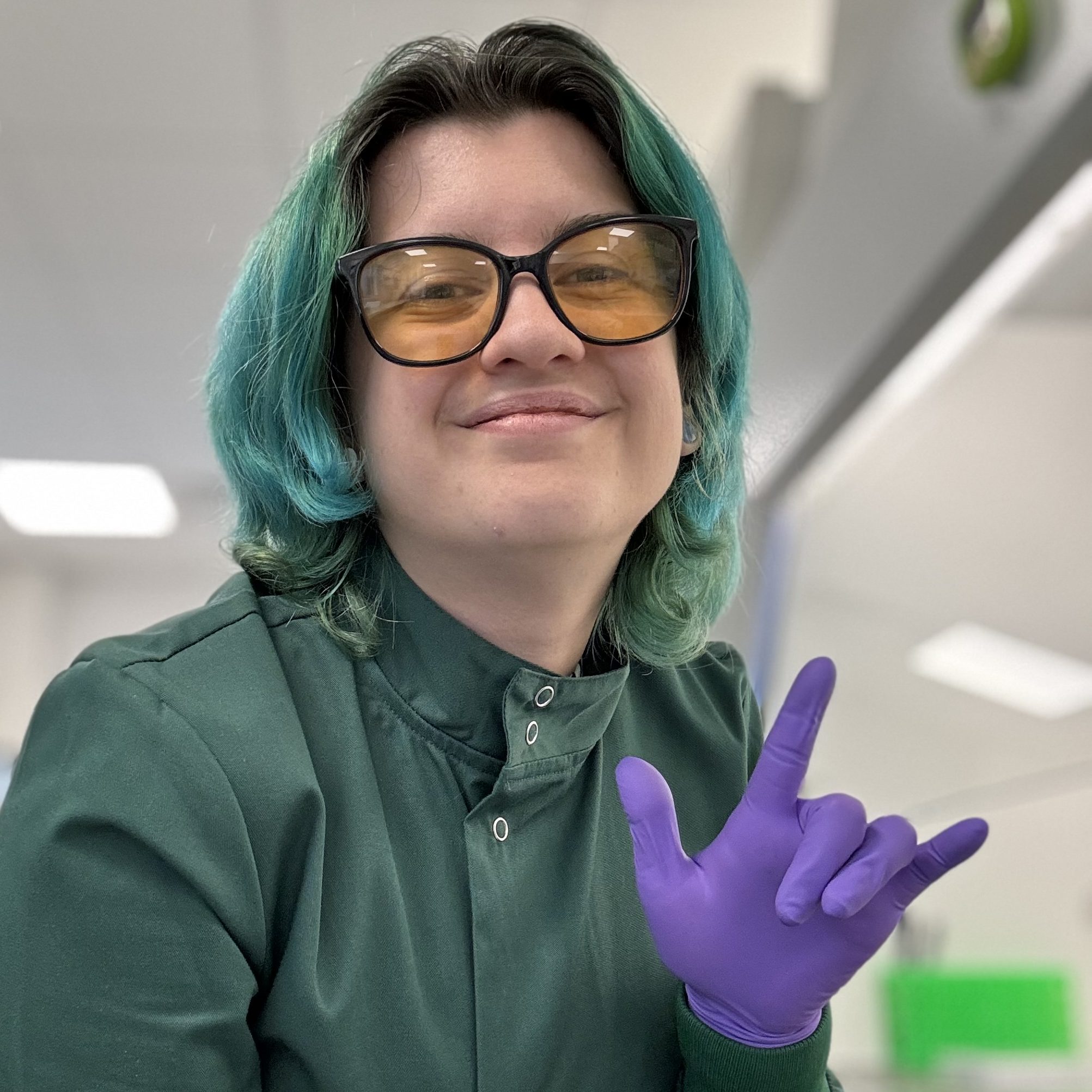
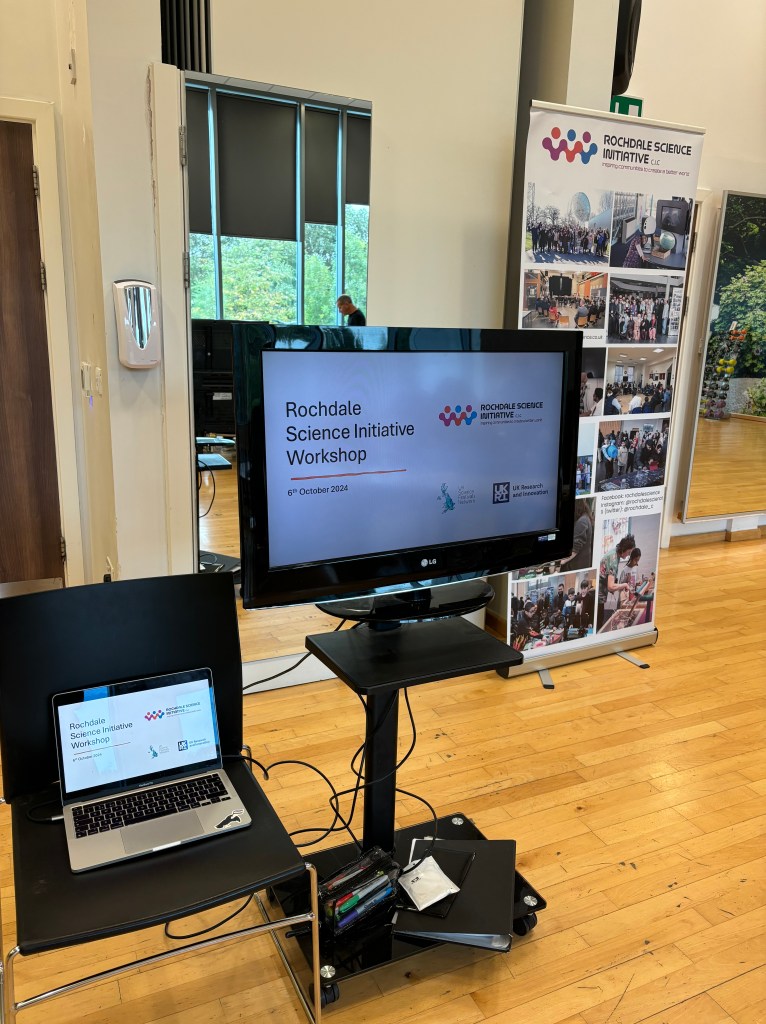
Across October and November I have been working with the Rochdale Science Initiative to bring science to Rochdale’s Deaf Community.
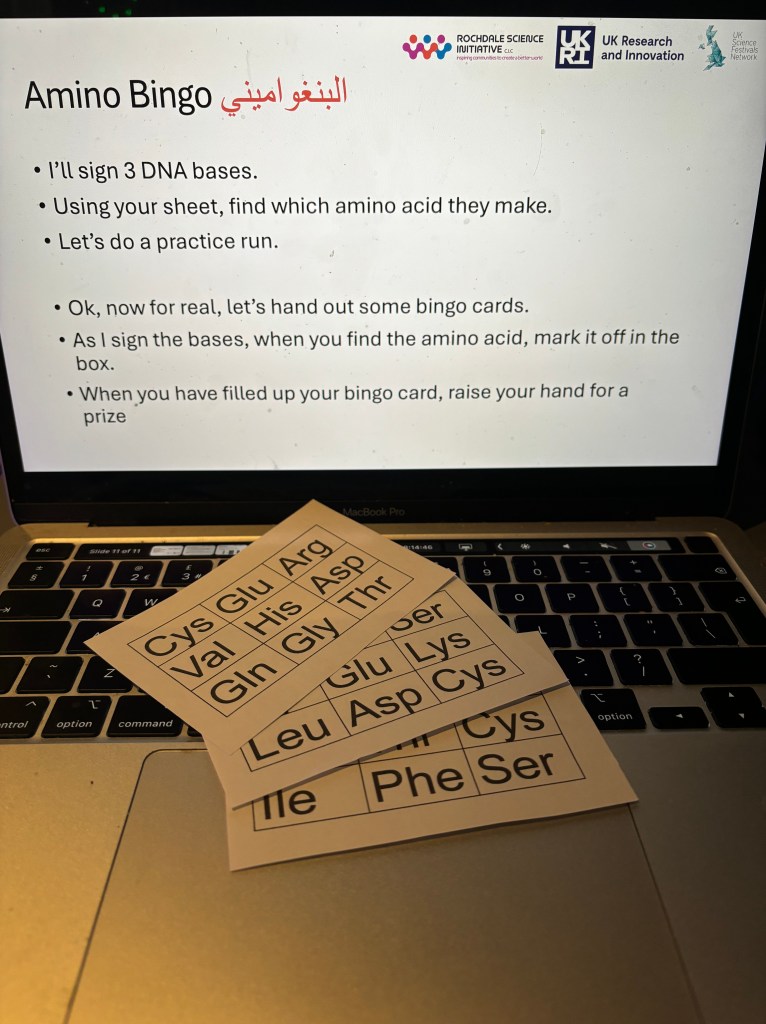
October’s session had me teaching the group about how DNA works, with the group learning about DNA, Transcription, Translation, and amino acids. With the help of two lovely British Sign Language (BSL) interpreters, I started off with a PowerPoint presentation that included key terms written in both English and Arabic, to talk about basic principles of DNA, and how DNA becomes amino acids.
After the brief introduction, I moved on to a really fun activity- amino bingo! Each participant was given a “code sheet” which had all the amino acid/DNA base combinations on it. I would use BSL to sign the 3 DNA bases, and participants would use their code sheet to identify which amino acid the signs corresponded to. They would then mark it off on their bingo card. This was lots of fun, and the group were really engaged, helping each other out, and getting competitive, which was really nice to see. The prize for a completed bingo card was a science sticker of their choice.
For the second session in this series, RSI then took the group on a tour of a science museum, which included BSL interpretation and a wide range of exhibits.
The third and final session in November was a feedback gathering session. I whipped out my trusty powerpoint presentation, and we talked about how STEM relates to us as Deaf people. I intended to take the group through each letter of STEM, and inviting them to write questions they had relating to that letter on different coloured cards. When talking about S for Science, I shared with them a case study about Opal, a young child who was born deaf, who was part of a clinical trial to restore her hearing. This lead to a wonderful open discussion about the different types of deafness, and whether we should assume people want to be “cured” of being deaf. I shared my experience as a Deaf scientist, and the group shared with me their experience of their deaf community. We talked about differences in lived experience- ie. my level of deafness and “passing” as a hearing person, compared to being profoundly deaf and relying on interpreters. After this conversation naturally ebbed, the group did end up writing some science questions that they had on the cards. They were prompted to write one question that relates to deafness, and one question that has nothing to do with deafness. I chose these prompts because they had a lot of questions about the science behind being deaf and the technology that helps us, but also, deaf people have other interests besides being deaf. Due to time constraints, I could not continue with the rest of the letters.
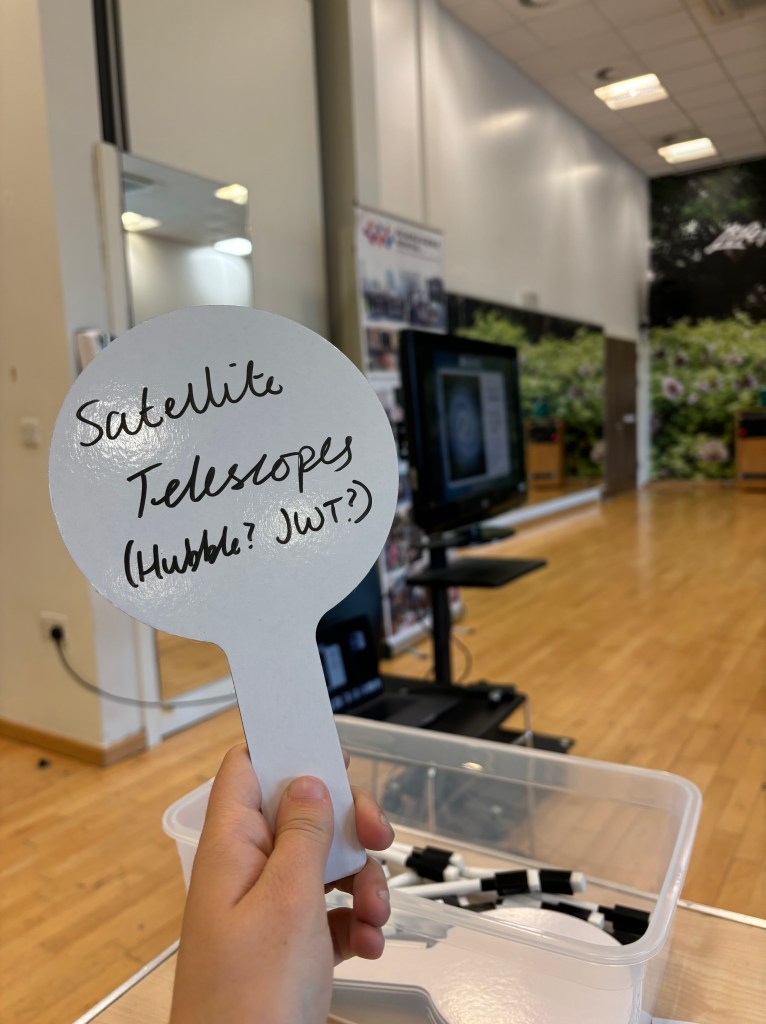
Instead, I moved on to the final activity I had planned: a bracket chart. I asked the group to stand and follow me to an area of the room with no chairs/obstacles. I made a list of different learning activities, and using a bracket chart, we figured out how the group likes to learn best. One side of the room was one option, and the other side of the room was another option. Participants were asked to stand on the side of the room that held their preferred option. We found out that their least favourite learning style was lectures, and after a couple of rounds, their most preferred learning activity was problem-solving.
Overall, this has been a fantastic endeavour, bringing science to deaf people in the community. Many thanks to the Rochdale Science Initiative for bringing me on to the project. Access to science is so important, and as a Deaf person and a Disabled person, I’ve found it harder to access than it should have been. There’s an assumption that just because my body works differently, I must not be a scientist. Either that I’m not interested or not capable. However, that cannot be further from the truth. The lack of qualified interpretation for science lessons in schools and universities is just one of many barriers for deaf people who want to get into STEM subjects. Deaf people should be supported in any way they need to get into STEM subjects if that is what they are interested in. Programmes like the Rochdale Science Initiative brings science to the heart of the community, and provides the much needed, and much lacking support that Deaf people need to overcome societies expectations of them.



 Max Fisher RSci
Leave a comment