Obsessive Compulsive Disorder
Obsessive Compulsive Disorder, OCD, is a highly stigmatised mental health condition, that primarily involves obsessive thoughts, and compulsive behaviours. But what does that mean? Obsessive thoughts are thoughts that are unwanted, distressing, and persistent. For example, in my case, I am constantly thinking about whether the food I’m eating is going to give me food poisoning, or an allergic reaction. These are not thoughts that I am choosing to have, and they are distressing.
Compulsive behaviours are behaviours that stem from these obsessive thoughts, often in a bid to prevent harm. For me, this might mean eating less, or changing what I’m going to eat. It might show up in the form of “rituals”, like turning the lights on/off a certain amount of times, or making “deals” with yourself or the universe. Eg, ‘if I can peel this orange so the skin comes off in one piece, I won’t be sick tonight’. Compulsions don’t always make sense.
Below, I have shared some of my own videos on living with OCD, as well as ARFID, which for me is an OCD-based eating disorder. There are also some general OCD resources below. Nothing shared is meant to be used as a diagnostic tool or medical advice.
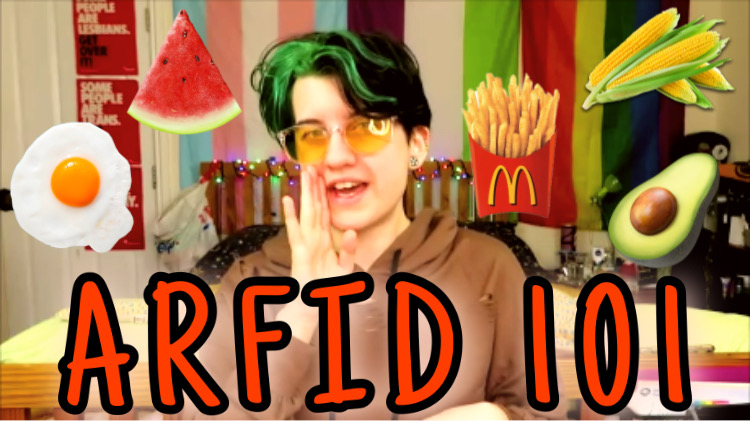
I Have Avoidant Restrictive Food Intake Disorder
Why is my ARFID video on my OCD page? Because mental health is not as clear-cut and compartmentalised as we would like it to be. My experience of ARFID hinges on my experience of OCD, and they absolutely feed off of each other. All experiences of OCD deserve representation, including ones that include eating disorders.

I Have Obsessive Compulsive Disorder
How does my OCD affect me? It might be quicker to tell you about the ways it doesn’t impact my life. OCD looks different for different people, even within subtypes. I for the most part experience contamination OCD, but that causes me to think more about food than it does about cleaning the house, or washing my hands.
Useful Websites
NHS Overview: OCD
The NHS provides a sensitive overview of OCD, including a brief overview of some symptoms, potential treatments, and next steps. They also list some potential causes, and note that OCD can develop and change over time.
OCD Action
OCD action is the UK’s largest OCD charity. It contains a huge variety of resources including information about subtypes, more in-depth symptoms, patient stories, and resources for both patients and their loved ones.
OCD UK
OCD UK provides access to some research opportunities for people with OCD, and shares results of research previously conducted on the condition. It also provides free events for different groups affected by OCD.
 Max Fisher RSci