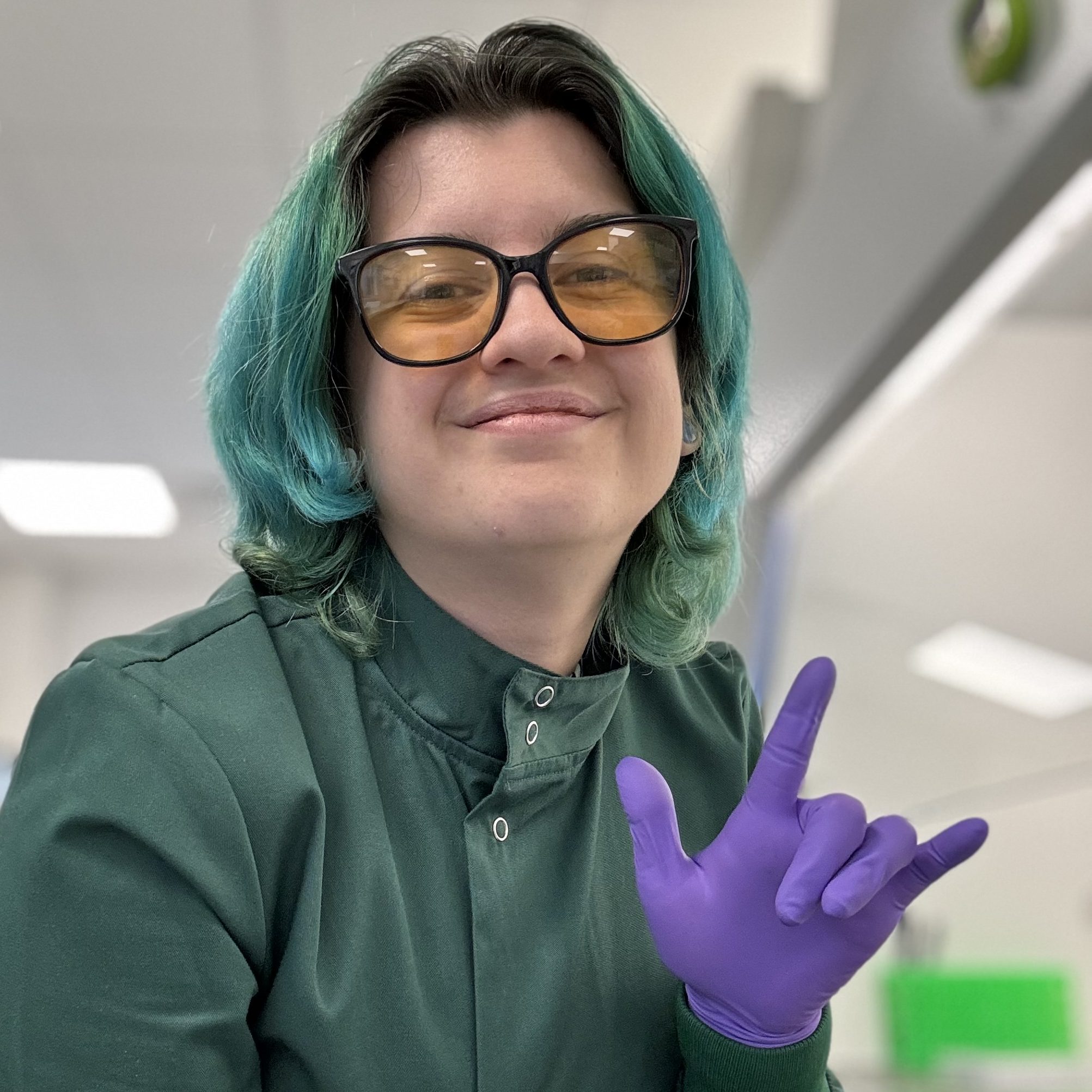
I am a bit late to the party on this one, but back in November 2024, I gave a talk at RAREFest, asking the question “Can science be kinder to disabled people?”.
But before I can give you my answer, let’s talk about RAREFest. RAREFest is a bi-annual festival in Cambridge, run by Cambridge Rare Disease Network, which brings together patients and patient groups, with scientists who are working in the rare disease world. It is a wonderful event where rare disease can be discussed and celebrated respectfully, in comparison to a world that doesn’t quite understand us, and just wants to “fix” us.
I first attended in 2022 with the company I worked at. We brought along some live cells for people to look at with a digital microscope, so they can understand the world of “in-vitro” just a little bit better. I found the whole experience so rewarding, and it was the first time I had seen science and rare disease in the same room. I felt so seen!
So in 2024, I asked to come back as a volunteer, and I also got to give my talk: “Can science be kinder to disabled people?” Which, absolutely yes they can! A personal highlight of this talk was the audience interaction. I described in brief all of my rare diseases, and asked, by show of hands, which of my rare diseases do I most want to cure? Lots of people voted for Cold Urticaria. Lots of people voted for Ehlers-Danlos Syndrome. A few people voted for DeafBlindness or Visual Snow Syndrome… But nobody actually voted for the one rare disease which I am desperately hoping to treat… I would like to be able to burp! I know. But it is a really uncomfortable condition that can lead to malnutrition, pain, stomach or esophageal perforations, death (!), and increased tooth decay. I hate it.
The way science talks about rare diseases, or disabilities in general, tends to be fuelled by funding opportunities. They don’t receive funding for diseases they would describe as “meh, not a huge deal, would be nice to live without it but it’s fine really”. I understand why the industry uses words like “debilitating”, “devastating”, and “terrible”, but it doesn’t always feel nice when that’s how my life is being described. It’s important that when we talk about curing diseases, we talk about the why. Are we aiming to cure a disease to enable a child to play football like she desperately wants to? Or are we aiming to cure a disease because disability is considered the worst thing a person can be?
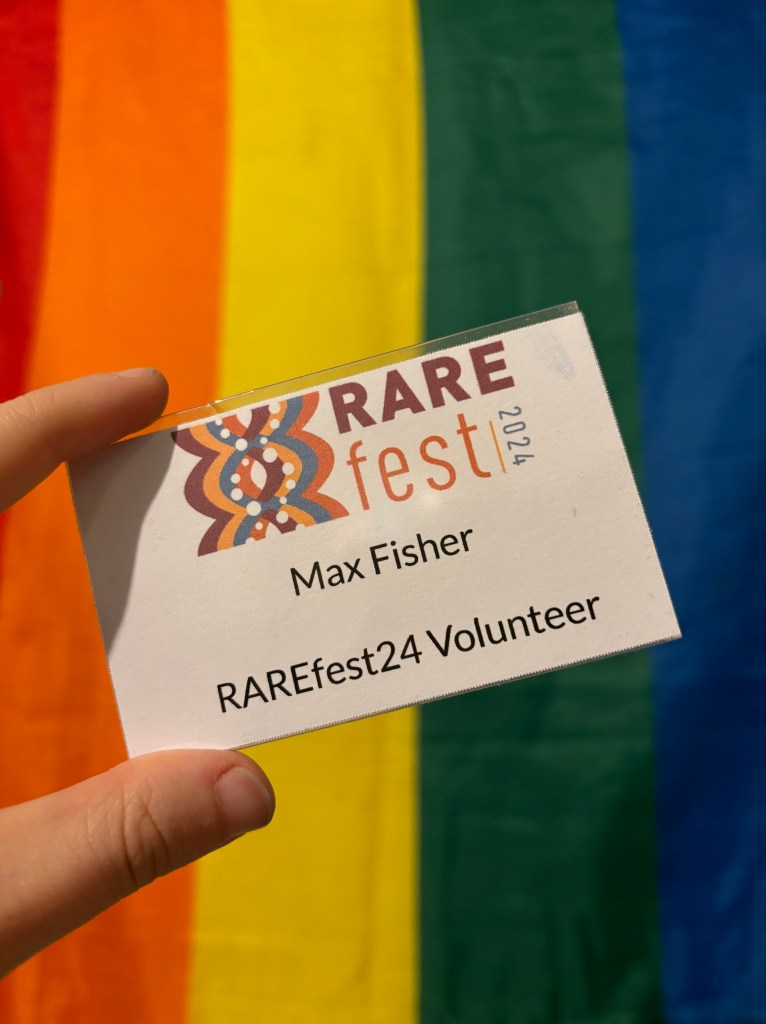
I also got to volunteer at the event, taking photos, sitting on the sign-in desk, and helping with the overall running of the event. These roles are super important, and if you want to see your favourite events continue to run, ask if you can get involved and volunteer! The worst they can say is no!


Leave a Reply