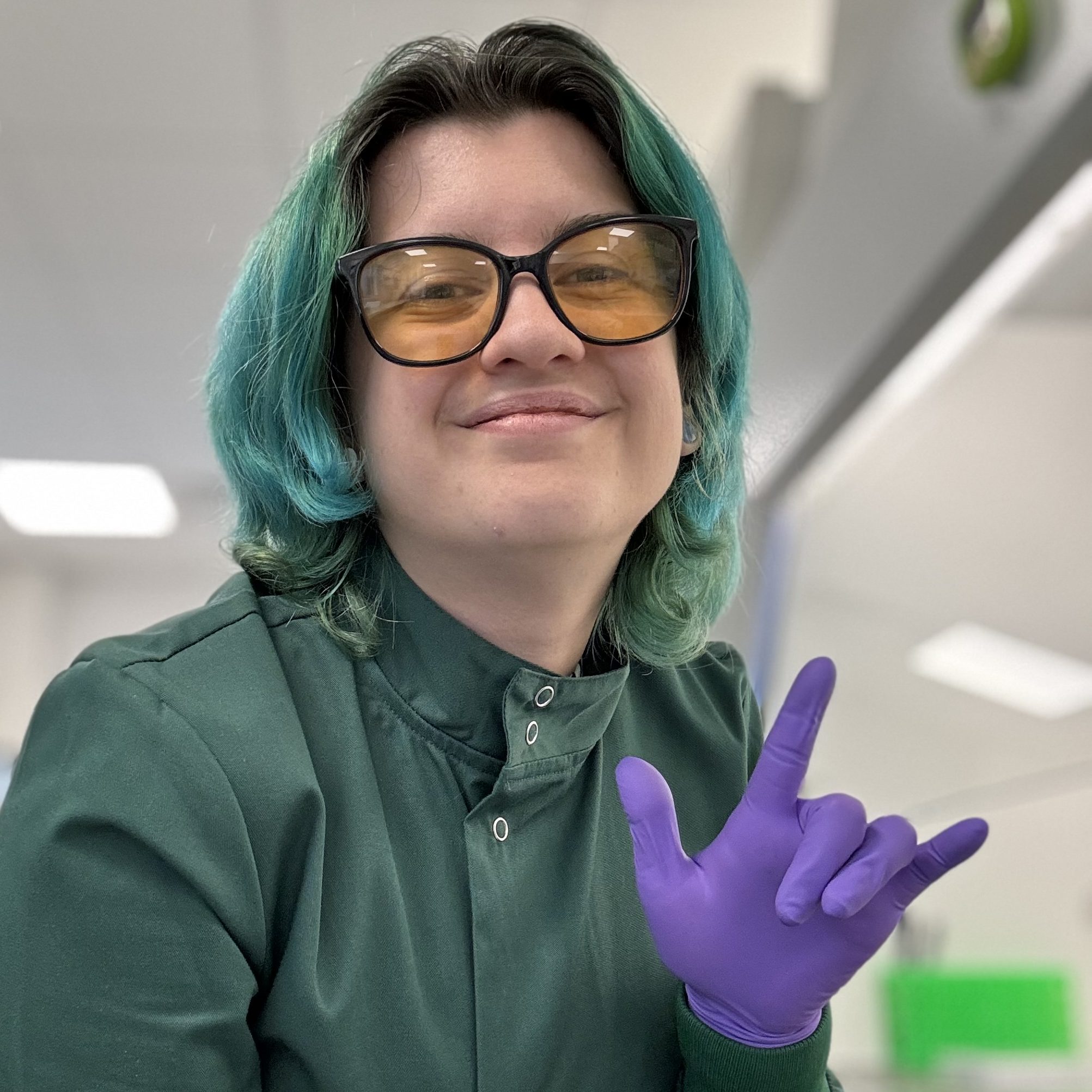
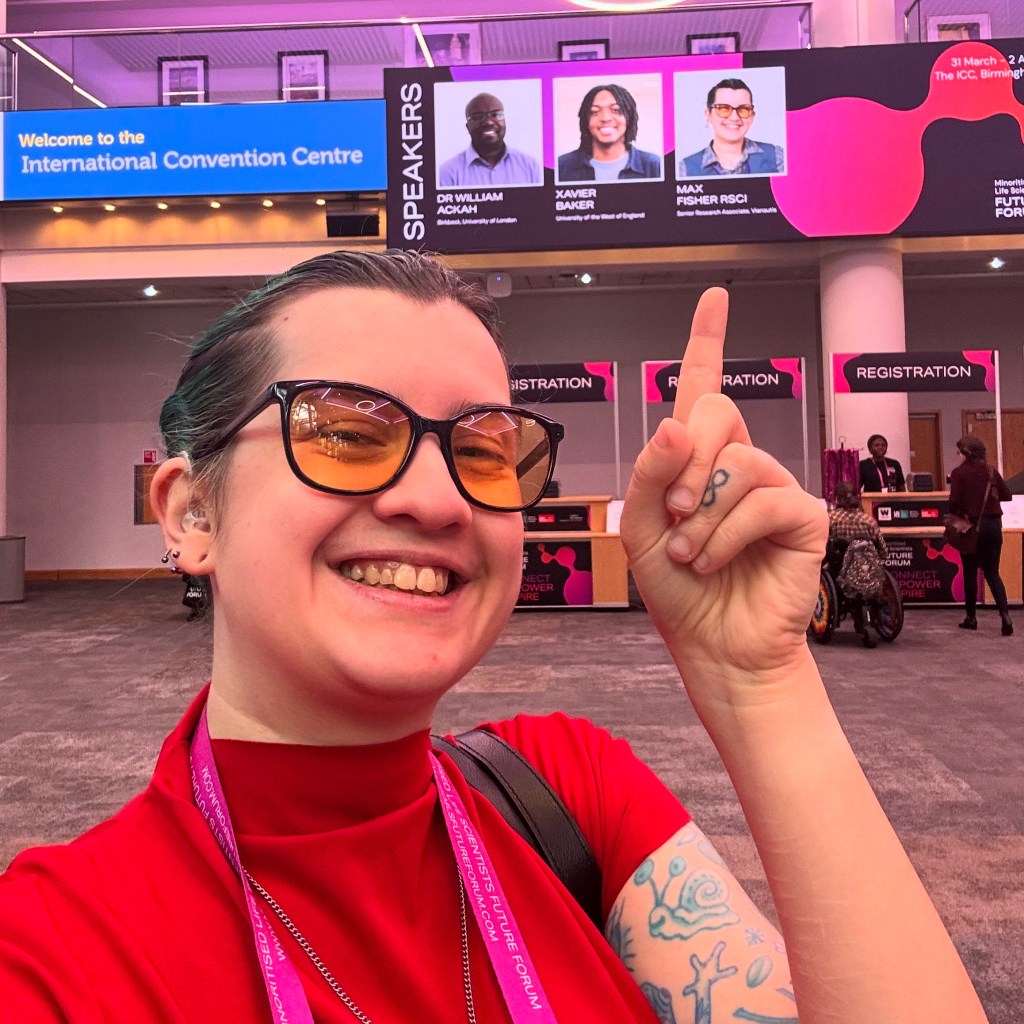
From 31st March to 2nd April, I attended Europe’s Inaugural Minoritised Life Scientists Future Forum, where I volunteered in its running, delivered a workshop on disability in STEM, and was one of the judges for the poster presentations. Never a dull moment, right?
There were so many incredible sessions, and it was truly an honour to speak alongside everyone who ran a session. We had discussions about:
- Public Health and Racial Equity,
- Building Influence and Inspiring Action
- Career talks from minoritised life scientists
- Literature Reviews focused on Black Women and Women of Colour
- Research Presentations from minoritised life scientists
- Diversity in STEM panel discussions
- And so much more!
Disability in STEM Roundtable
On Day 1, I chaired a roundtable discussion about disability in STEM to an academic audience. I started by introducing myself, my disabilities, and a brief overview of my career journey. I then opened the floor for discussions.
I invited the audience to introduce themselves and their own journey, if they were comfortable with that. Lots of participants got involved, and we had a really diverse range of life experiences, from students, to researchers, to lecturers, to industry staff. We got talking about how we can market our disabilities to the STEM industry. The focus was on transferrable skills, and how being disabled gives us so many additional, and valuable, skills. For example, being able to problem-solve. As disabled people, when we’re faced with inaccessibility, the onus is often on us to overcome the problem. This can be applied to issues in the lab, or in STEM in general, with ease.
We wrapped up with some more questions, and a general acknowledgement of institutional ableism, intersectionality, and disability pride.
Poster Judging
I was fortunate to be invited to be a judge for the student poster presentations. These were a mixture of undergraduate posters, postgraduate, and doctoral posters. The standard of work was incredible, and every person who presented was professional, prepared, and very keen. They made the judging really difficult because everyone’s presentation was up to a very high standard.
I saw posters that dissected:
- Statistics and literature about Black maternal mortality and morbidity,
- Compared differences between innate muscle strength between South Asian women and white women in specific hip exercises,
- A literature review on a rare disease where the (undergraduate!) author can confidently say he has read every single paper on it,
- A plan to use machine learning to improve hearing aids,
- And antibiotic resistance in soil. I didn’t even know soil could be resistant to antibiotics.
Safe to say I learned a lot…
Volunteering
Volunteering is very rewarding, and covers many roles and skill sets. At MLSFF, I took on a role that I haven’t done before. I was a part of the social media team, where I took short videos for use in TikTok and Instagram videos to promote MLSFF on social media. I also took some photos to be used on the website and social media posts of LinkedIn.
I also supported in a “where do you need me?” capacity. Sometimes something just needs doing, and doesn’t have a specific person assigned to it. This included assisting with poster placing and marshalling people to the correct room for sessions.
If this sounds like something you’d like to get involved in, sign up to the MLSFF newsletter so you don’t miss the volunteer callout for the next conference!
 Max Fisher RSci
Leave a comment