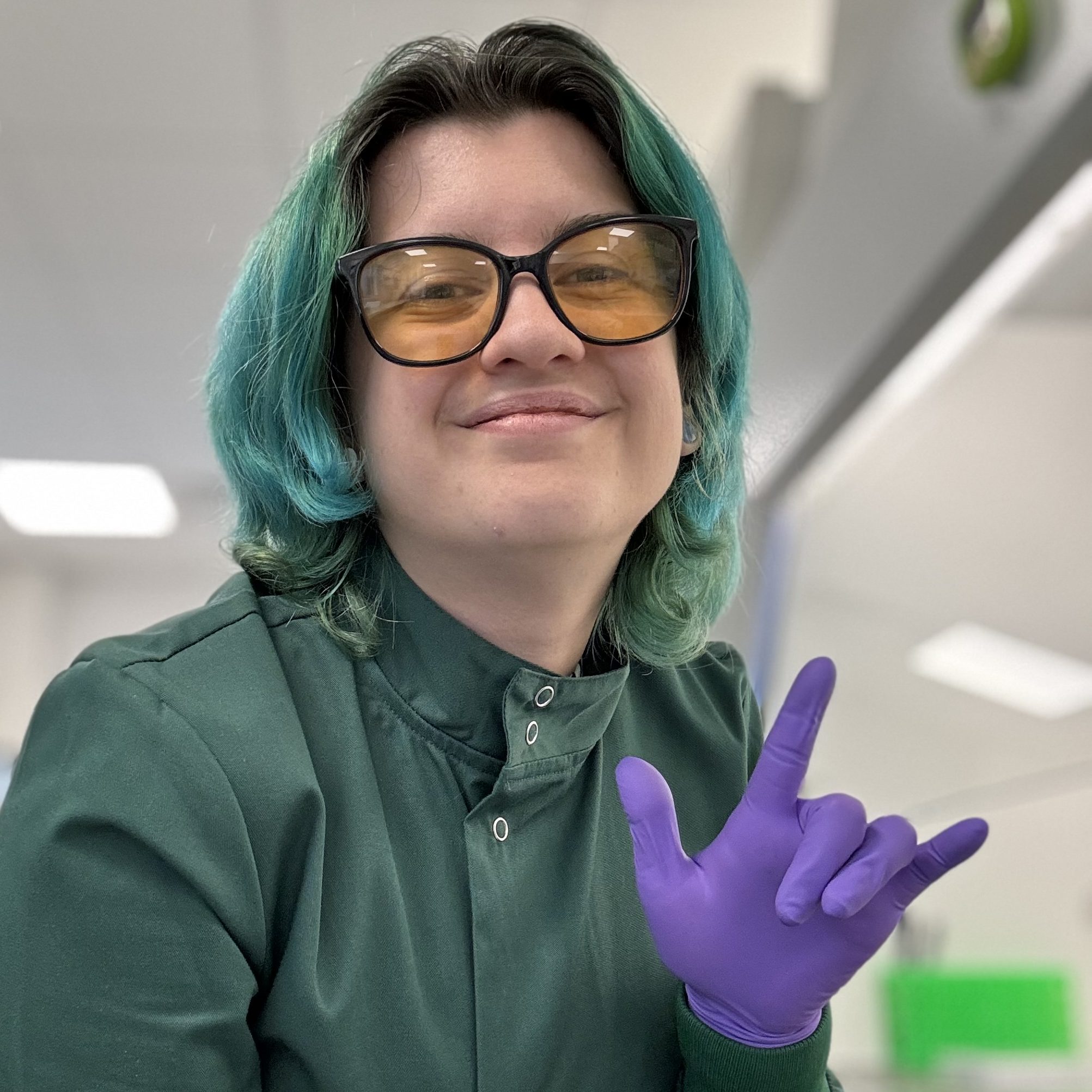
For British Science Week, I was privileged to join pupils from a Primary School in Cambridge to deliver a session for their life cycles unit!
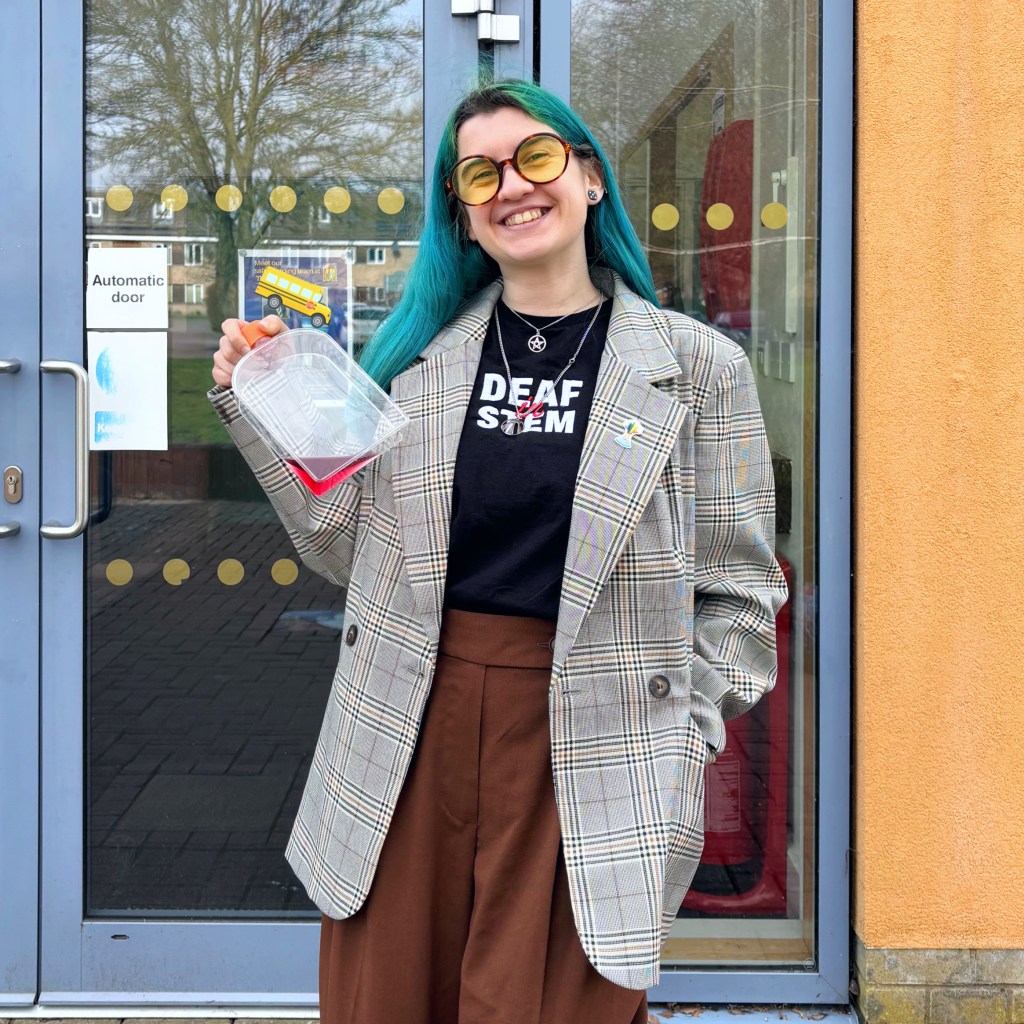
As a cell biologist, I work with life cycles all the time, albeit in a slightly different way to the plants they had been studying. I taught them about growth phases of cells, and showed them what growing cells in flasks actually looks like. I have some laminated photos of some cells down the microscope at different magnifications, and I placed this flask full of juice (Summer Fruits Oasis, if you were wondering) over the top to give the children an idea of what it looks like in the lab.
I then gave them a crash course on the role of DNA, RNA, transcription, and translation, and how that related to life cycles. We paused here for some questions to make sure that everyone was on the same page, and that nobody was getting left behind.
As we moved on, I taught them the letters A, C, G, and U in British Sign Language, so we could play amino acid bingo in a fun and interactive way. In one of the classes, I asked whether any of them already knew some sign language, and all of them, in perfect unison, signed “cheeeeese” at me 🧀. They were each given a “code sheet” containing the codon wheel, and taught how to use it. We had a practice, and then moved on to the game.
Once everybody had got a bingo, we had some time for another Q&A! These were a curious bunch, and I was asked a huge variety of questions:
🧬 How is DNA made?
💼 How long did you have to study to become a scientist?
🧠 You must be very smart, do you have a lot of brain cells? (I hope so lol)
🧪 How are babies made?
⭐ How are starfish born? (I had to Google this one afterwards, it’s eggs)
🦈 Are sharks fish?
🦠 Can I be a scientist when I grow up?
Thankful for the opportunity to shape the future scientists of tomorrow, and inspire excitement for intersectional science!
Are you looking for a scientist to come to your event? Get in touch!
 Max Fisher RSci
Leave a comment